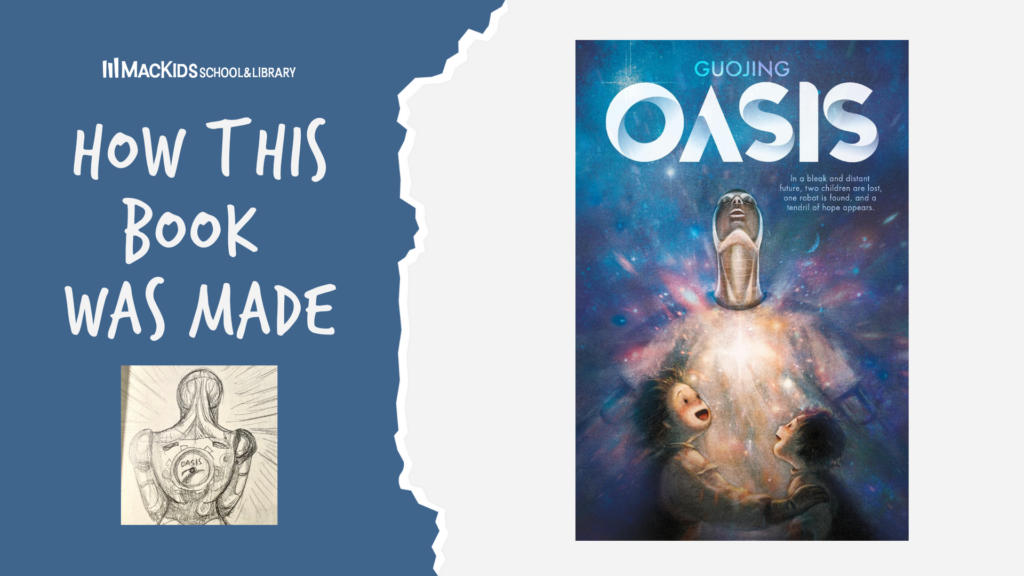
Go behind the scenes of Oasis by Guojing, the critically acclaimed, unforgettable graphic novel about two children and one robot who form an unbreakable bond as they survive in a world that values the efficiency of tech over the care of humanity.
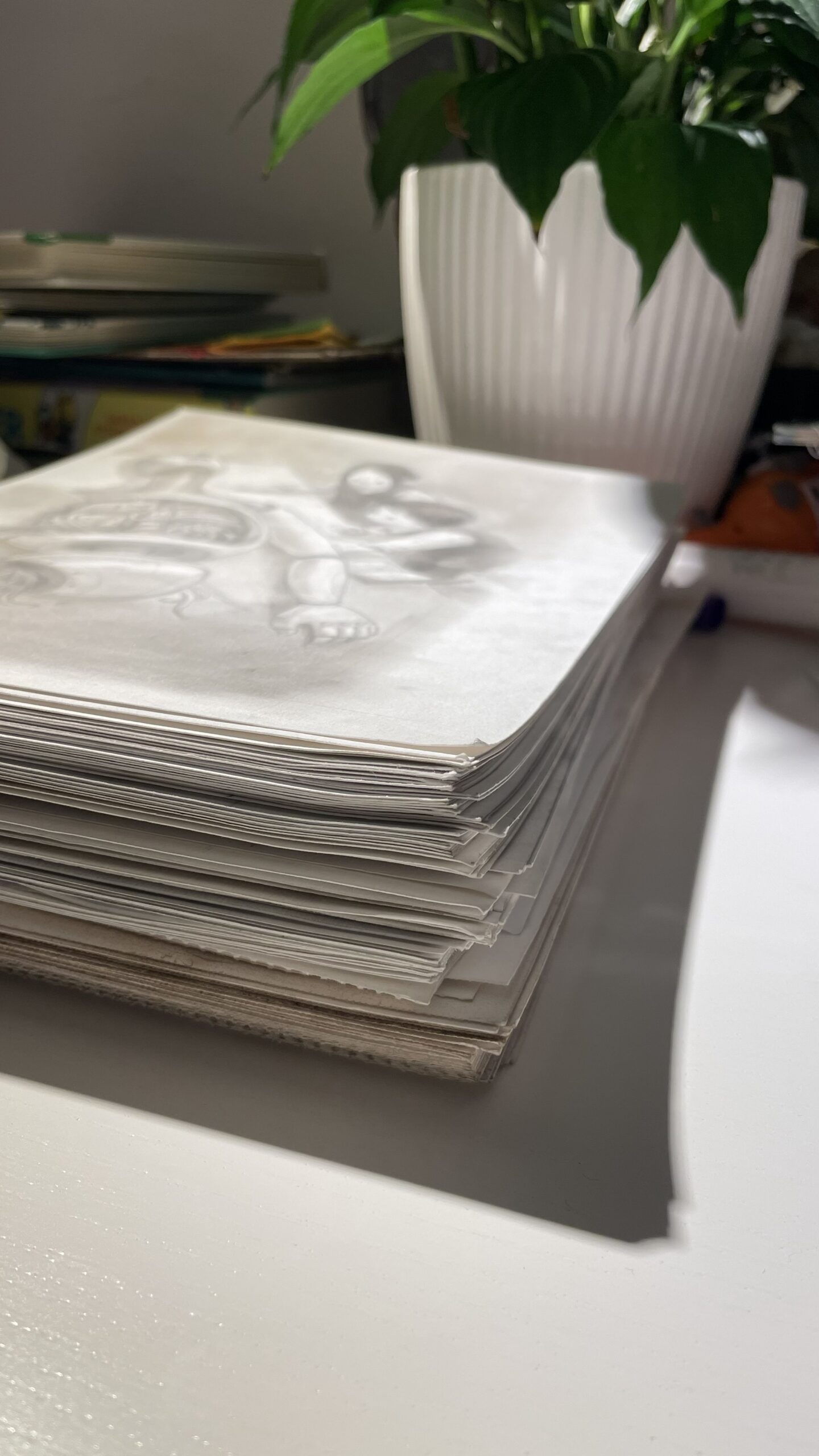
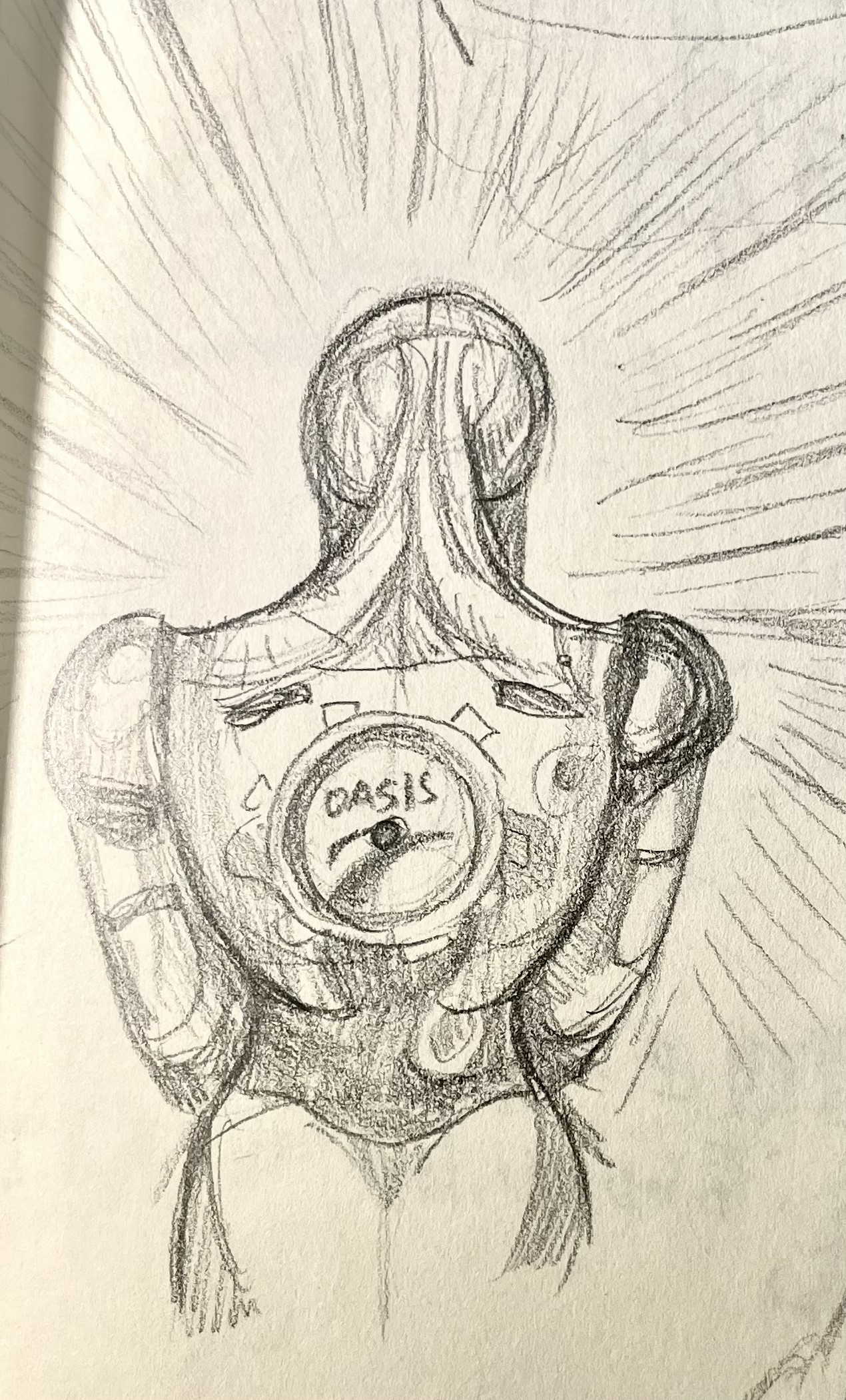
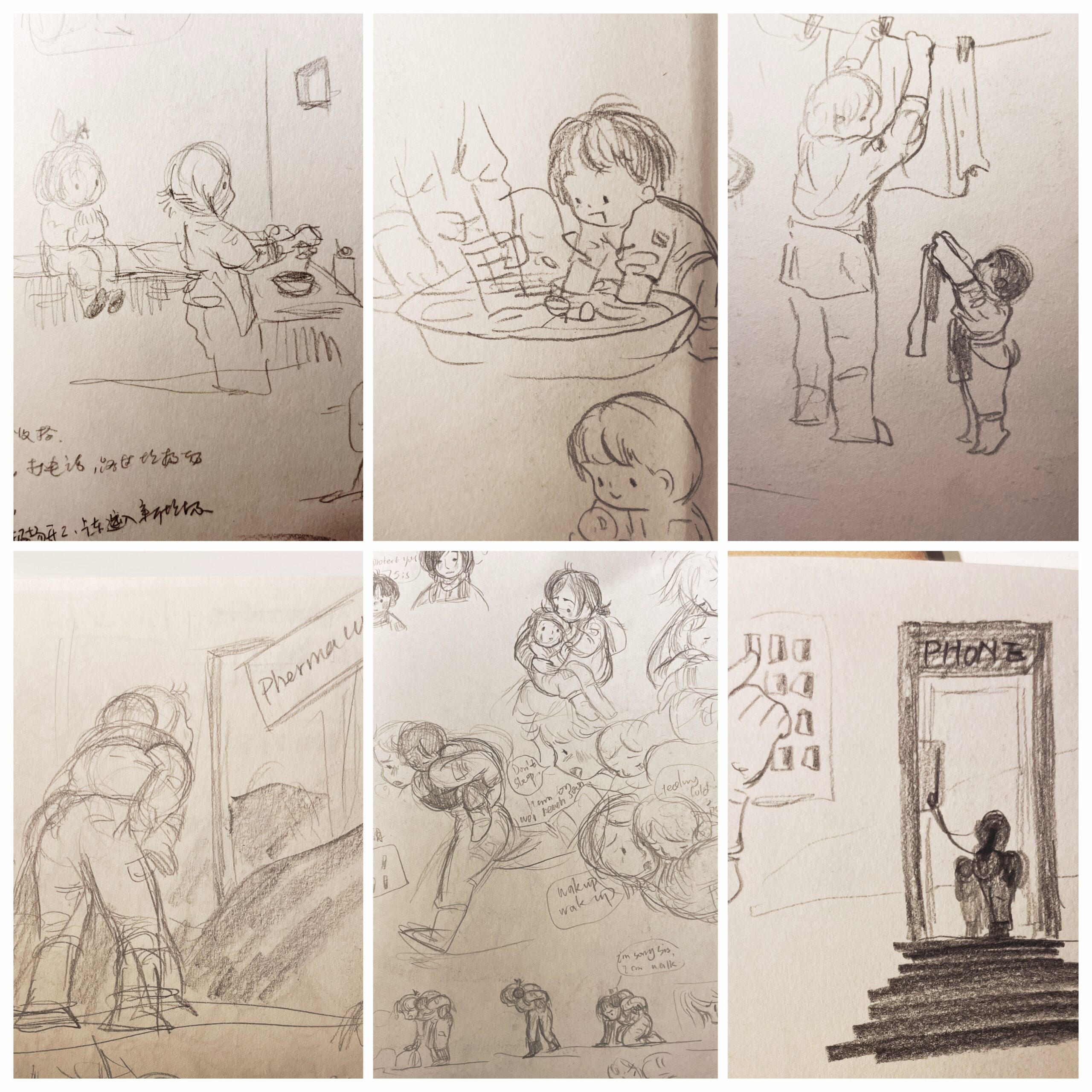
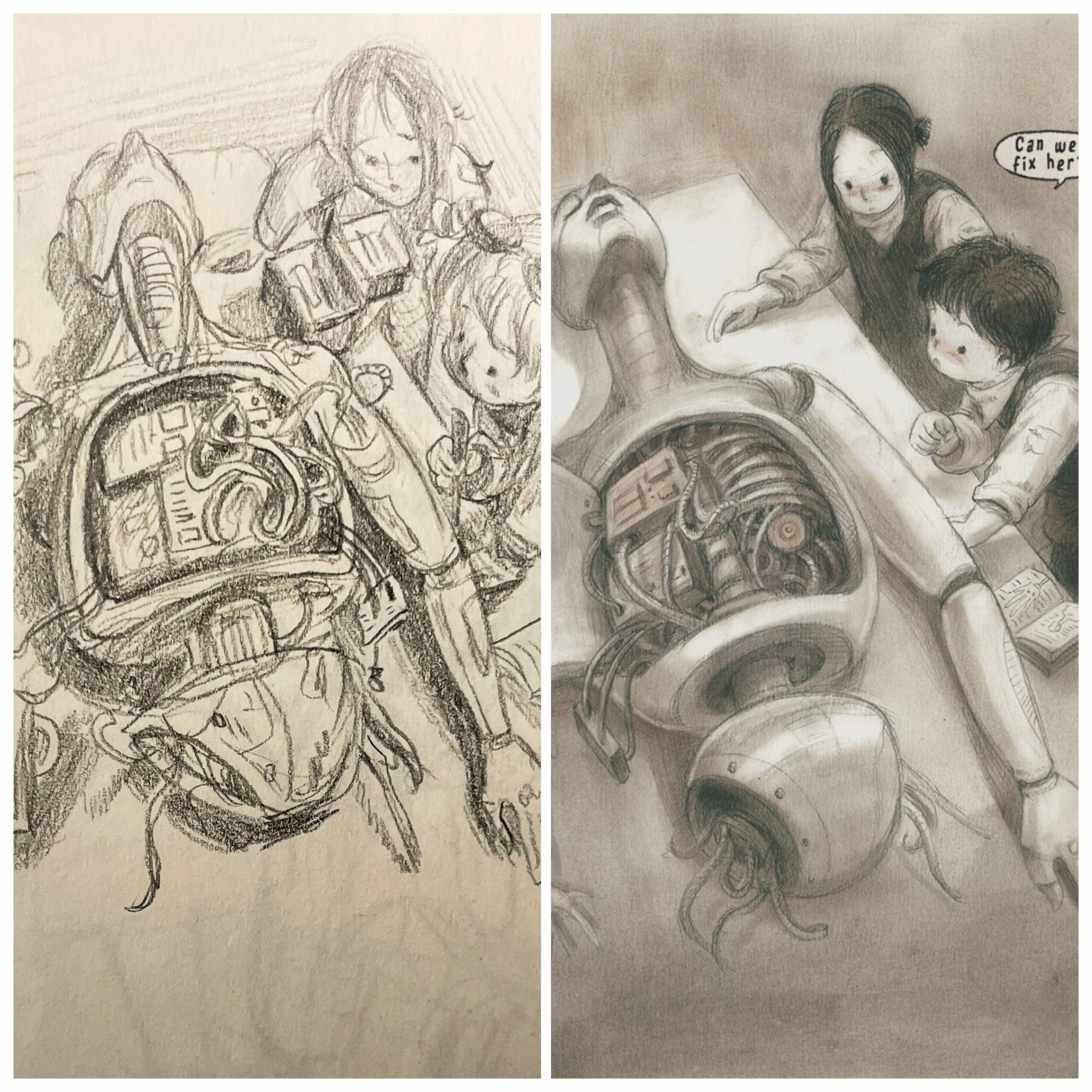
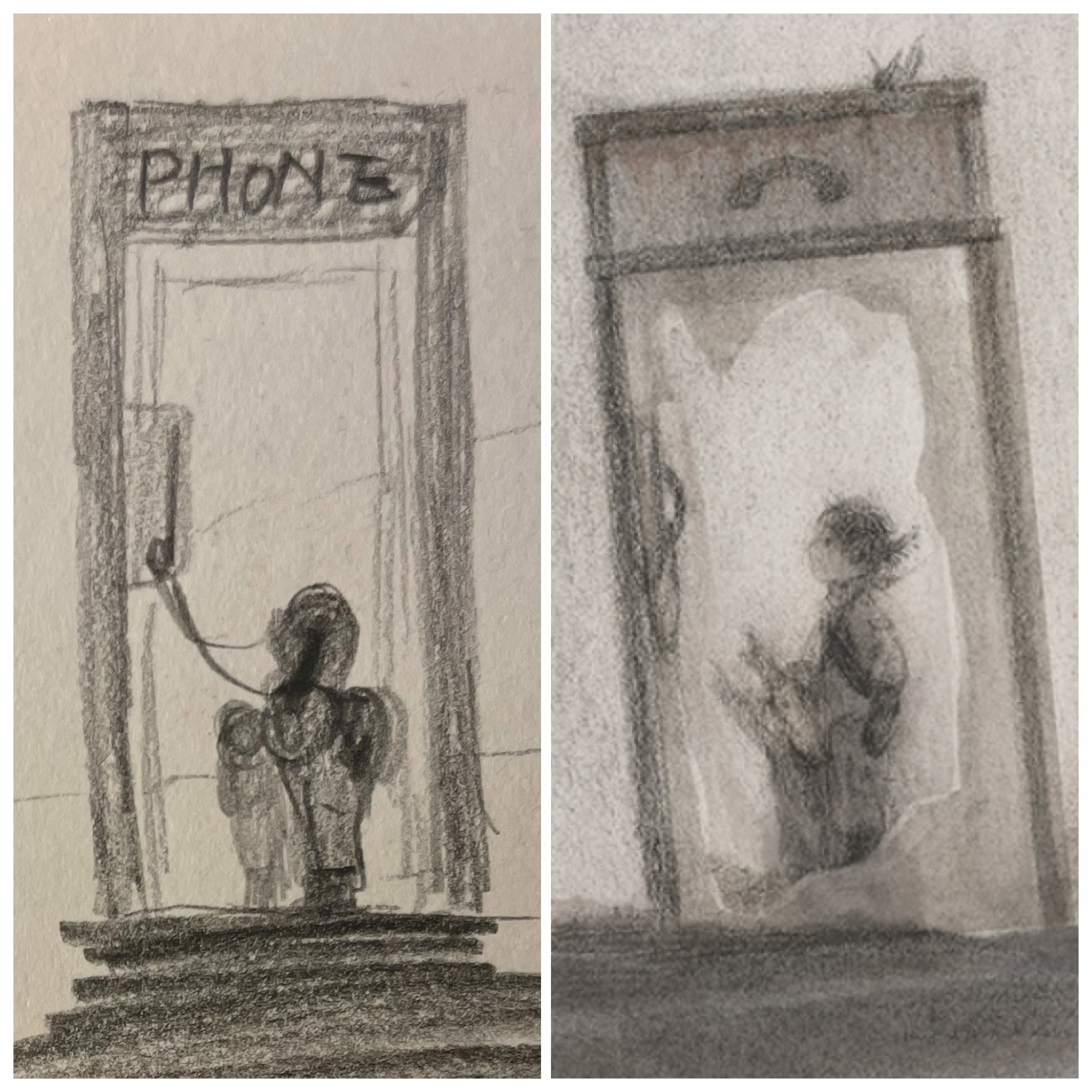
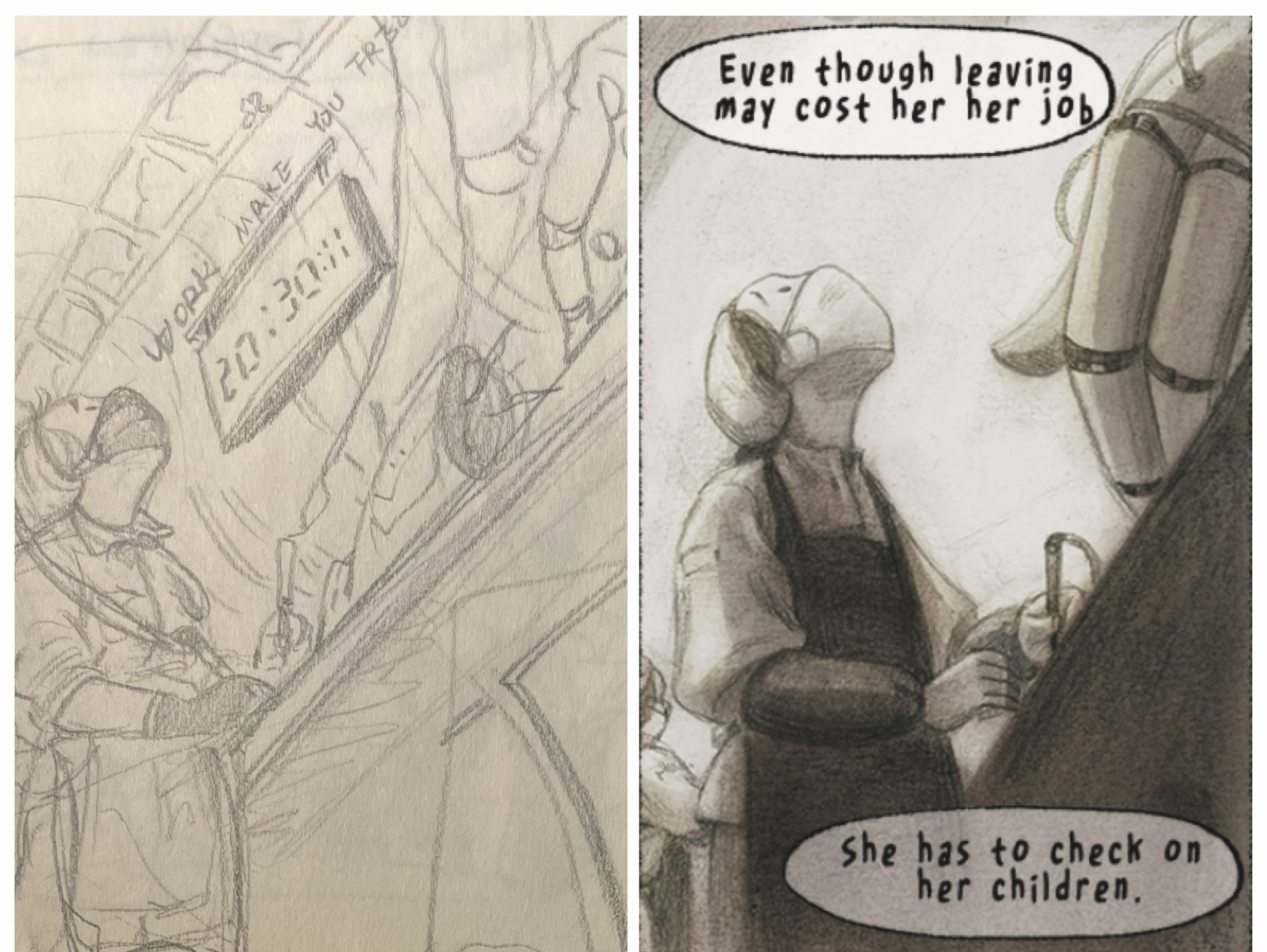
Read on for an interview with Laura Godwin, VP Publisher of Godwin Books and Guojing, author and illustrator of Oasis. Plus, find behind-the-scenes images from the writing and drawing process!
Laura: Guojing’s agent and I were having lunch in the West Village, and unbeknownst to us, it was the day before our offices would shut down because of the pandemic. Isabel knew that I loved GJ’s art, and when she let me know that GJ was working on a project that needed a home, I couldn’t wait to see it. And once she put the two of us in touch, it became obvious that GJ was such a thoughtful, creative artist, it was impossible not to want to work with her! Not only did I love the project itself, but I was so moved by the inspiration behind it. Which leads me to ask GJ to tell you about that inspiration herself.
Guojing: First and foremost, I am deeply grateful for every moment I spent working with Laura. She offered me a wealth of valuable guidance, from insights on the story’s development, the ending, to suggestions for the book’s title. At the same time, she gave me a remarkable degree of creative freedom. Laura would raise questions and challenges, prompting me to explore imaginative solutions, which is a process that inspired deeper thought and sparked my creativity in ways I hadn’t anticipated.
Laura: What inspired you to write this story?
Guojing: This story was inspired by the plight of left-behind children in China, the Philippines, and other developing countries. Millions of children are forced to live with their grandparents, and in some extreme cases, are even forced to live alone. A question has been lingering in my mind: while we look around and take pride in economic and technological development, basic human needs have become luxuries. Therefore, I envisioned the stark contrast between highly advanced artificial intelligence and left-behind children, hoping to find answers together with readers. Is it the fault of technology, the flaws in the system, or human indifference?
Laura: How much time did you spend researching before you began writing the story?
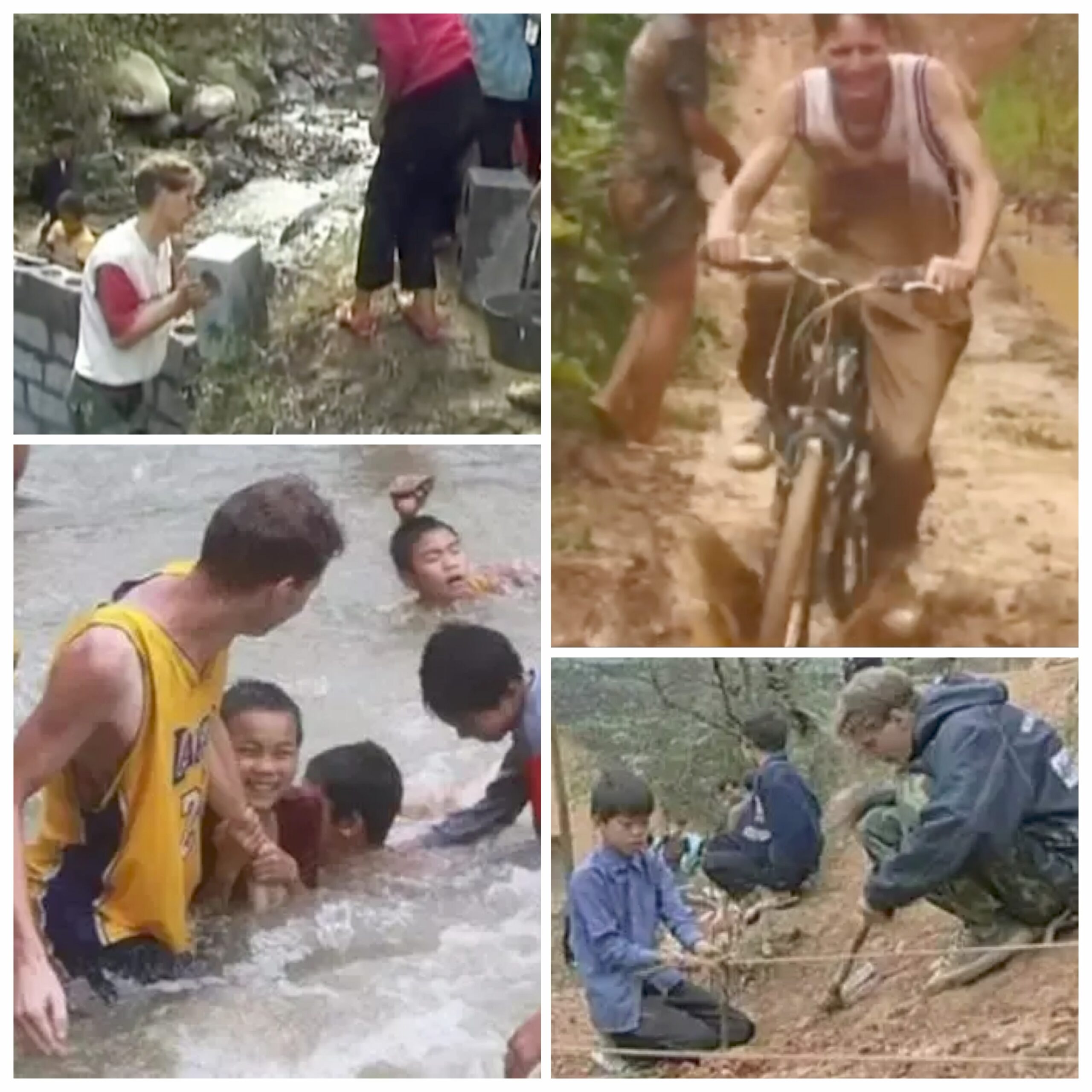
Guojing: When I created this book, I did some research on left-behind children. I discovered some volunteers who went to villages in China with left-behind children to provide care and education for those who needed it. One of them, a German named Eckart Löw, worked as a low-paid teacher in a village in China for almost ten years. He taught the children many things, such as writing, art, music, and English; he also encouraged them to design and build small dikes to irrigate crops and to participate in screenwriting and filmmaking. The children regarded him as a father. Like many other teachers, he brought knowledge and hope to these left-behind children. On the other hand, Eckart Löw said that these children are very sensitive and vulnerable. After establishing a good relationship with their temporary teachers, they have to face the pain of losing contact again. When he had to leave the village for some untold reason, he said, ‘I feel like my heart has died.’
Laura: Did you incorporate any of these real-life details into the story, or were the stages of research and then the process of writing the story, stages unto themselves?
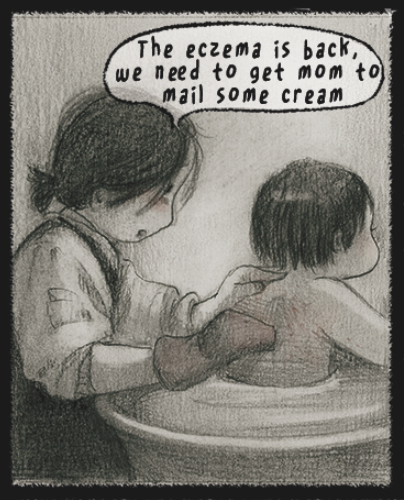
Guojing: One scene in the story depicts the younger brother suffering from eczema, inspired by my own child, who had a severe case when he was three months old. I was incredibly anxious during that time. So I included this detail in the story, depicting the hardships the two children face living alone in the desert. My description of the little girl caring for her brother was inspired by my mother, the eldest child in her family, who acted like a little mother, caring for four younger sisters and a younger brother.
Laura: How did you envision what the Robot would look like? She is at once so human, and yet so clearly also a machine.
Guojing: If we look closely at the AI’s facial design, we’ll notice tiny lines between her eyes and cheeks. I designed these lines to symbolize tears. You can interpret them as pity or compassion for humanity, helplessness, or the emotions imbued in the robot. And as an irony of humanity’s gradually numbing emotions.
When machines are imbued with emotion, and people work like machines. You can see the mother in the crowd walking like a machine towards the giant gears in the factory; this feeling is inspired by the old black-and-white film ‘The Metropolis’. As many people have discussed, has the machine AI replaced the human? The answer may be in our hands and our kindness.
Laura: Can you tell me about the symbolism of the moon in this story?
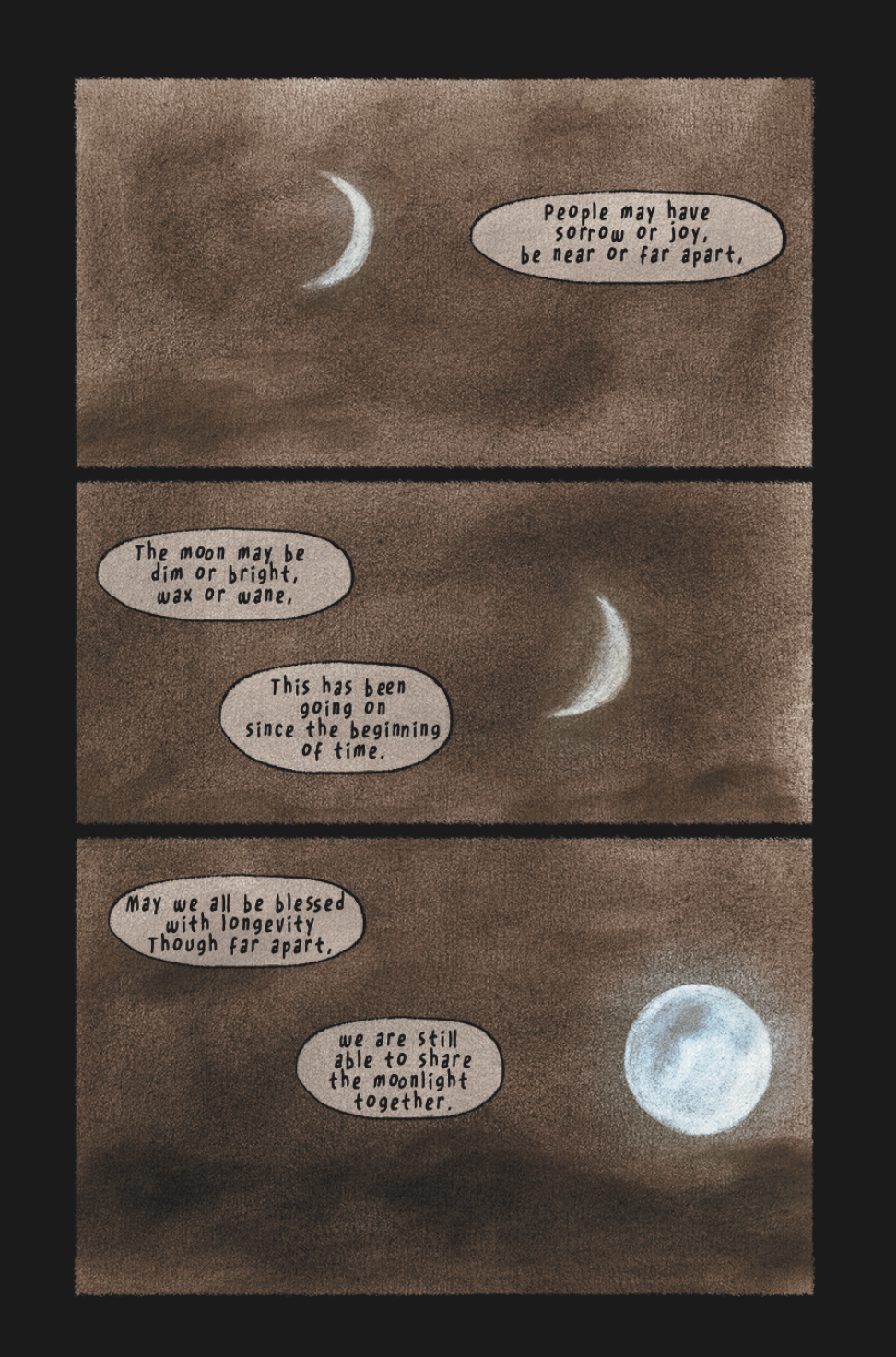
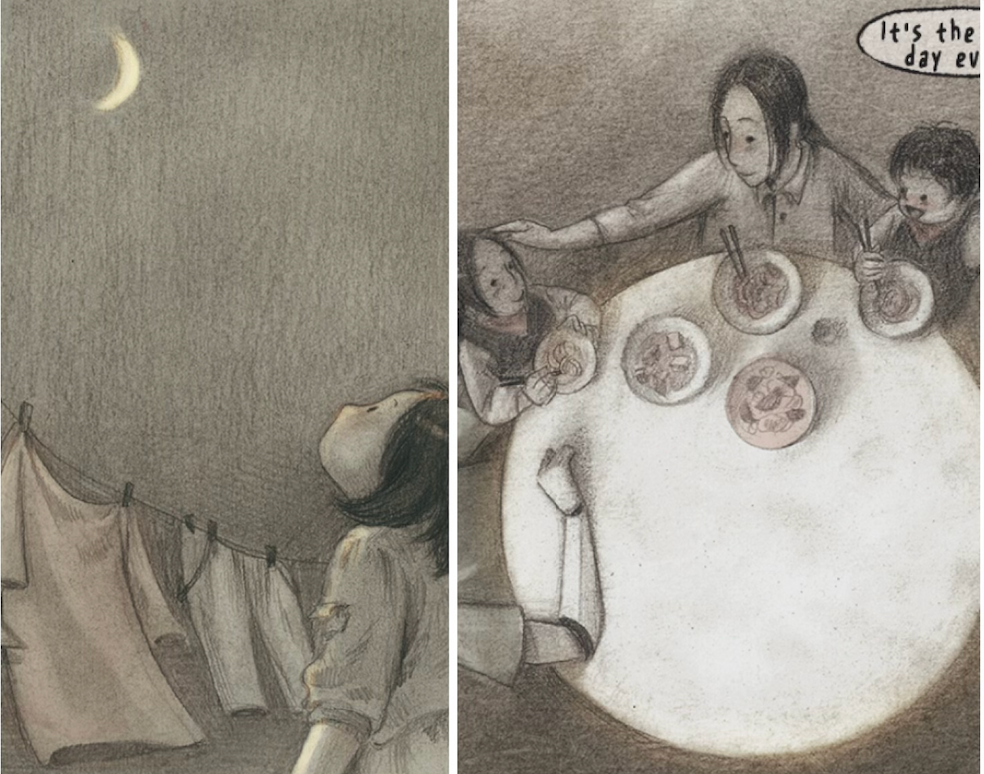
Guojing: The moon plays a vital role in this book. At the beginning of the story, after bathing her younger brother, the little girl goes to the balcony to hang his wet clothes to dry; the sky is clear, and the moon is a crescent. At the end of the story, the family reunites around the dining table, its shape as round as the full moon. In traditional Chinese culture, the moon symbolizes family reunion. I quoted the ancient poem “When the Moon Shines Bright” written about 945 years ago. AI mother recited this poem to encourage children who were saddened by missing their mother. At the same time, AI also used this poem to depict the sky and hope, hoping that the children could overcome their sorrow, look to the future, and embrace hope.
Laura: And there are several spreads where food plays an important role. Tell me more about that.
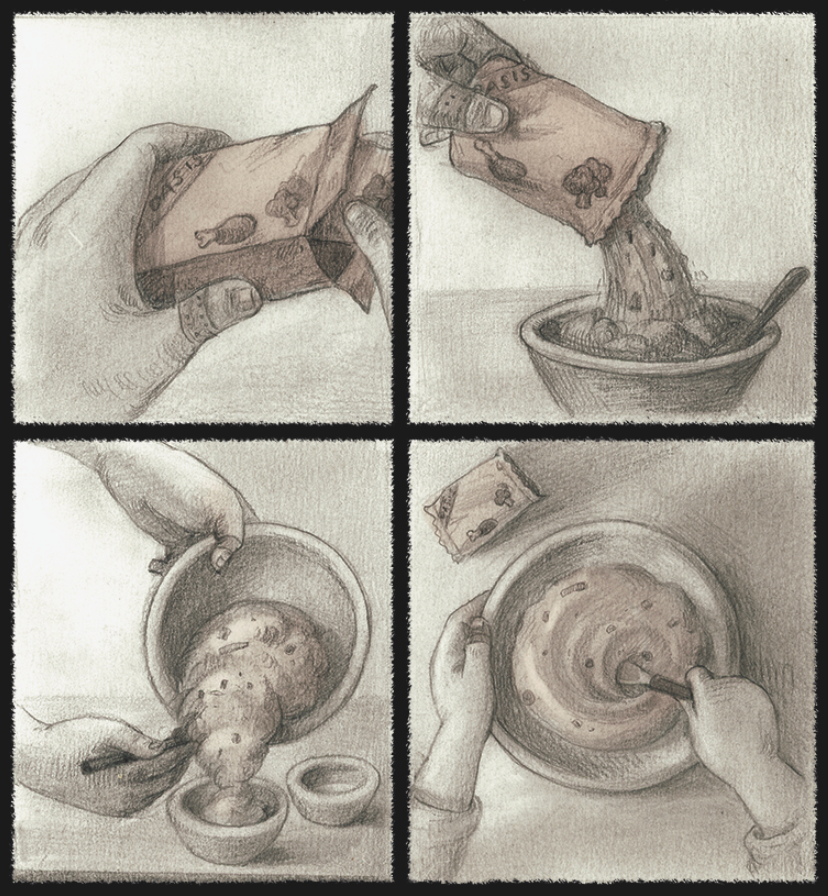
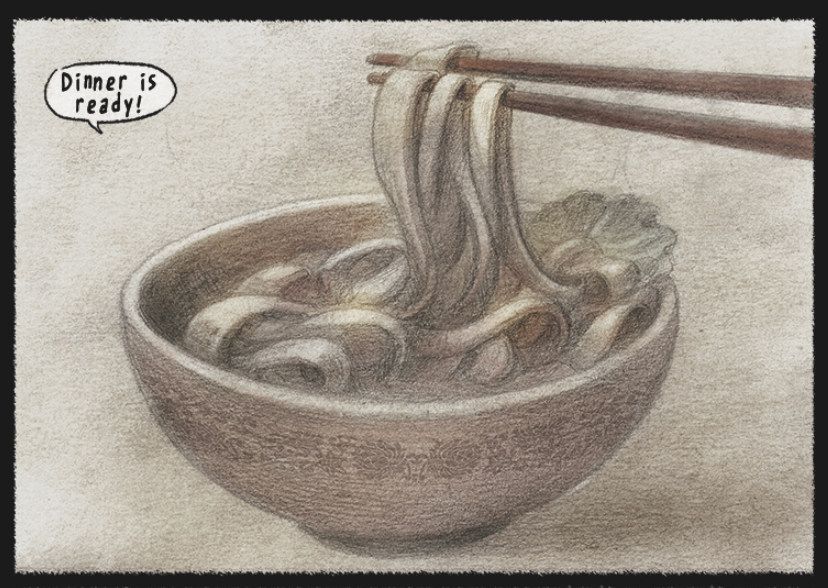
Guojing: I tried to create different atmospheres based on the differences in food. When the children were alone in the desert, their food was instant powder mixed with water, containing only simple vitamins and tasting bland. When the family was together, as we saw, Mom cooked noodles, which was my dad’s secret recipe in reality. Every time I came home, he would cook noodles. From kneading the dough to pulling the noodles, he did everything by hand. For him, handmade noodles were the best.
Guojing: Here’s another interesting connection: In Chinese, the word for love, “爱”, is pronounced ài and written as “ai”. What a fascinating coincidence!
About Oasis
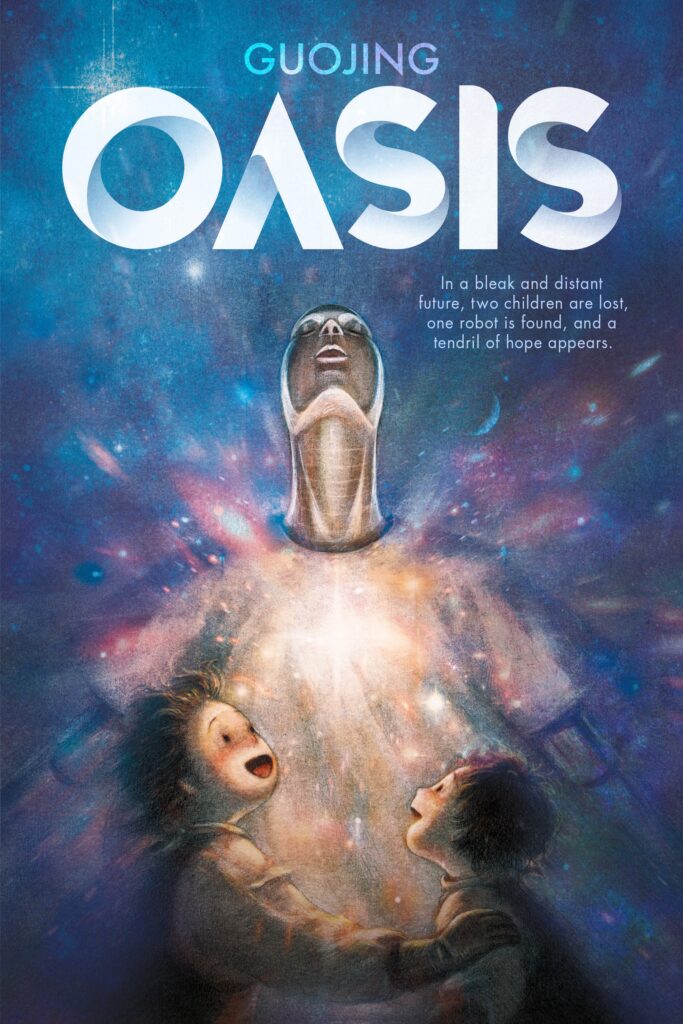
Oasis
By Guojing
Ages 8-12
On Sale Now!
With all the heart of The Wild Robot and the wonder of A Rover’s Story, two children and one robot form an unbreakable bond as they survive in a world that values the efficiency of tech over the care of humanity.
JieJie and her little brother, DiDi, are living on their own in a barren desert while their mother works tirelessly to earn their admission into Oasis City. Their days are filled with weathering sandstorms and scavenging for water, but everything changes when they come across an AI-powered robot lying dormant in an abandoned junkyard.
Filled with equal parts hope and suspense, Oasis tells the story of a potentially not-so-distant future that you won’t ever forget.
Praise for Oasis
“It’s rare to find a book so thought-provoking and haunting that also feels like it’s welcoming the reader with a warm hug.” – The New York Times
A New York Times Best Book of the Year
An NPR Best Book of the Year
A PEN America Best Book of the Year
A Publisher’s Weekly Best Book of the Year
A Kirkus Best Book of the Year
A Horn Book Best Book of the Year
A School Library Journal Best Book of the Year
A BookPage Best Book of the Year
A Boston Globe-Horn Book Honor Title
★ SEVEN STARRED REVIEWS! ★
★ “Soft lines and simple character designs by Guojing (The Only Child) emphasize JieJie and DiDi’s youthful vulnerability and optimism amid a somber landscape devastated by pollution and climate change. The delicate pencil shading evokes a powerful sense of tone and atmosphere, while large uncluttered panels inject a feeling of intimacy even in the vast desert. It’s an evocative and moving graphic novel tale of sacrifice and what it means to be a family.”–Publisher’s Weekly, starred review
★ “A thought-provoking, affecting allegory that reflects difficult realities yet is filled with love.” —Kirkus, starred review
★ “Subtle monochrome art in brilliantly paced, spare panels underscores the emotional depth of this compelling narrative. . .Perfectly blending story and art, this deeply compelling fable assures middle-grade readers that, with resilience, adaptability, and the hope for connection, love can prevail even amid desolation.” —Booklist, starred review
★ “The graphic novel format is expertly used here to build narrative movement through both text and illustrations, and panel size and shifts in perspective highlight key moments. . .While hope hovers at the edges of the story, the primary focus is love, turning inward toward it and nurturing it when the larger world feels impossibly grim.”–BCCB, starred review
★ “The story unfolds cinematically, with carefully orchestrated images capturing evocative facial expressions in dynamic exchanges between characters seeking refuge and familial reconciliation. . .Themes of struggling for survival, preserving family connections, embracing humanity, and cultivating love resonate throughout this endearing tale of perseverance marked by hope against all odds.” —Horn Book, starred review
★ “Oasis is a visually arresting, emotionally moving tale sure to resonate with readers drawn to stories about family in its many guises, as well as those compelled to contemplate the ways in which technology can pull us apart—or become a surprising catalyst for drawing us closer together.” —Book Page, starred review
★ “… Spectacular stunner that perfectly balances evocative art with minimal text…Guojing’s stunning sophomore graphic novel captures an unbreakable bond between children and their parent, despite separation and deprivation.”–Shelf Awareness, starred review